
Handwriting Lines
Handwriting is often thought of as forming and joining letters. But it’s also about the lines — and the lines on paper are not always given the attention they deserve.
Being aware of and learning to use lines is important.
With every student I support — child or adult — I look closely at their use and awareness of lines.
For now, we’ll focus on the horizontal lines — margins and top lines are for another time.
Regular Lines
You might not even consider what I call 'regular lines' as handwriting lines. We tend to take them for granted. Yet there's a reason why lined paper is used over plain... to guide the flow of words so they are easier to follow. In effect, they free up space in working memory — we don’t have to think about keeping writing in line.
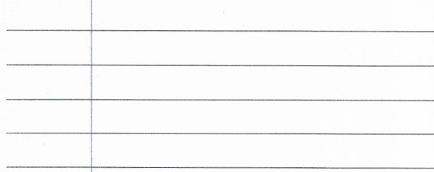
'regular lines'
Many children seem to write between the lines.
This makes it harder to distinguish between ‘tall’ and ‘small’ letters, and some don’t understand that ‘divers’ are allowed to break through to the line below.
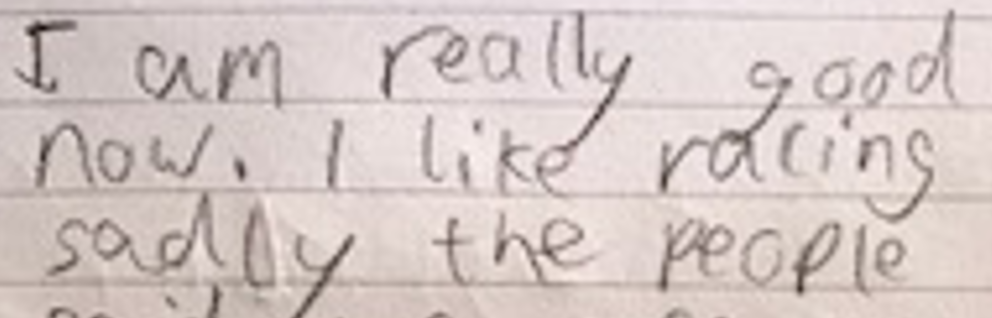
baseline: letters 'floating' between the lines
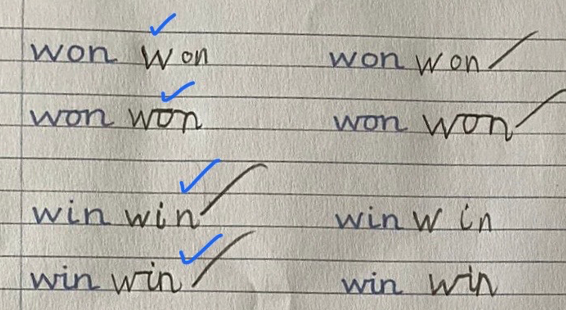
letters starting to 'sit' on the lines
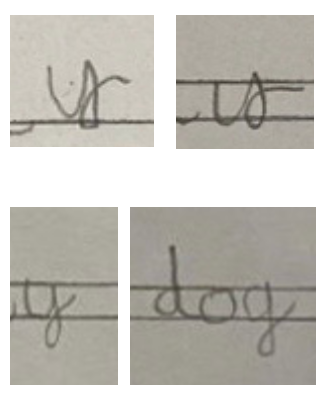
learning to allow 'divers' to break through the bottom line
Special Handwriting Lines
Special handwriting lines for practice can be brilliant. They can really help children get control of letter size and position in relation to other letters.
I use the word can very deliberately — because they can also cause problems.
It's so important that time is spent making sure children know HOW to use them. Too often it's assumed this is obvious but it's not as simple as it might seem. Children's visual perception is often still developing and how they interpret using the lines varies.
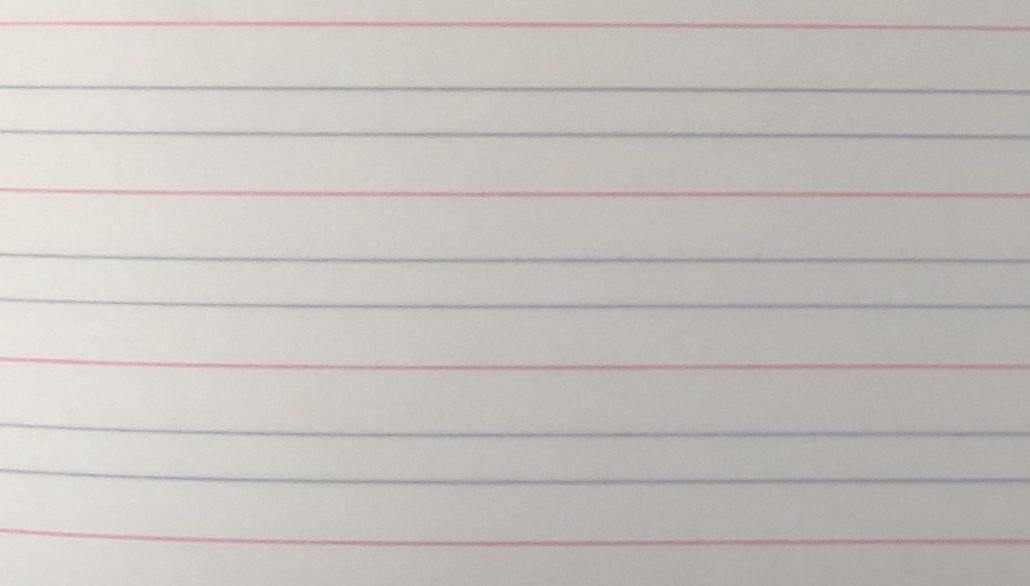
commonly used handwriting lines
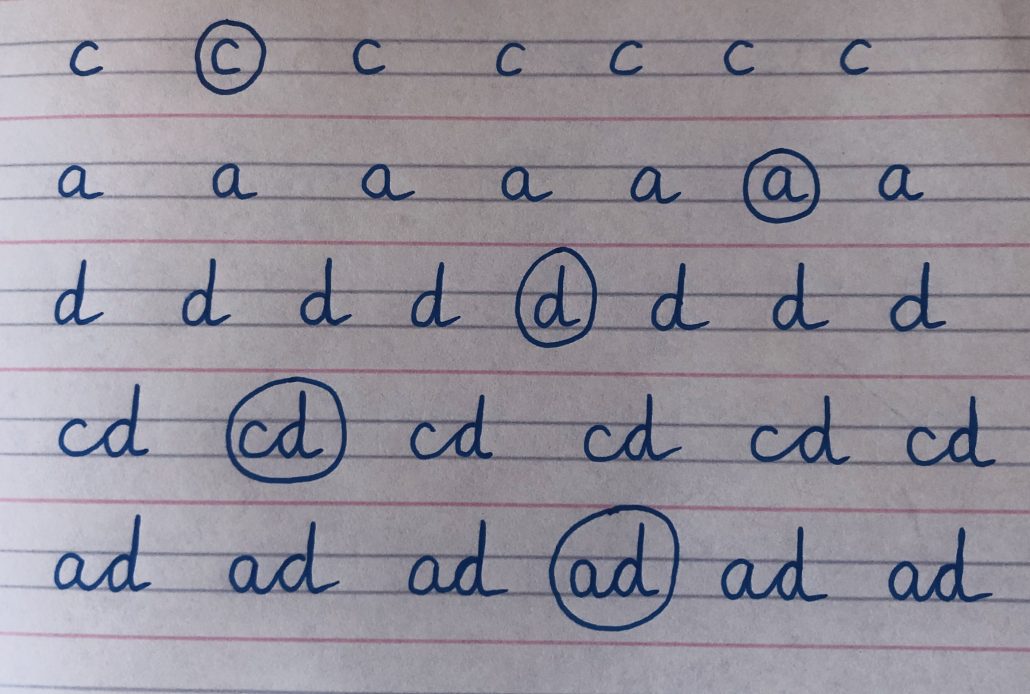
example of use
Common Difficulties
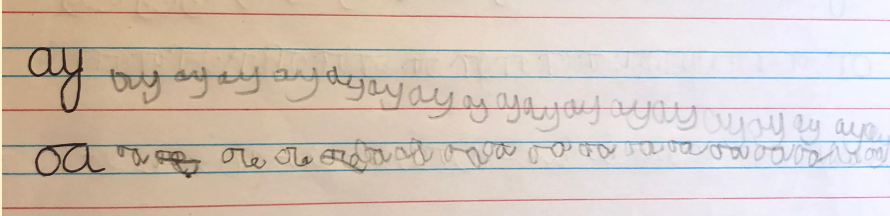
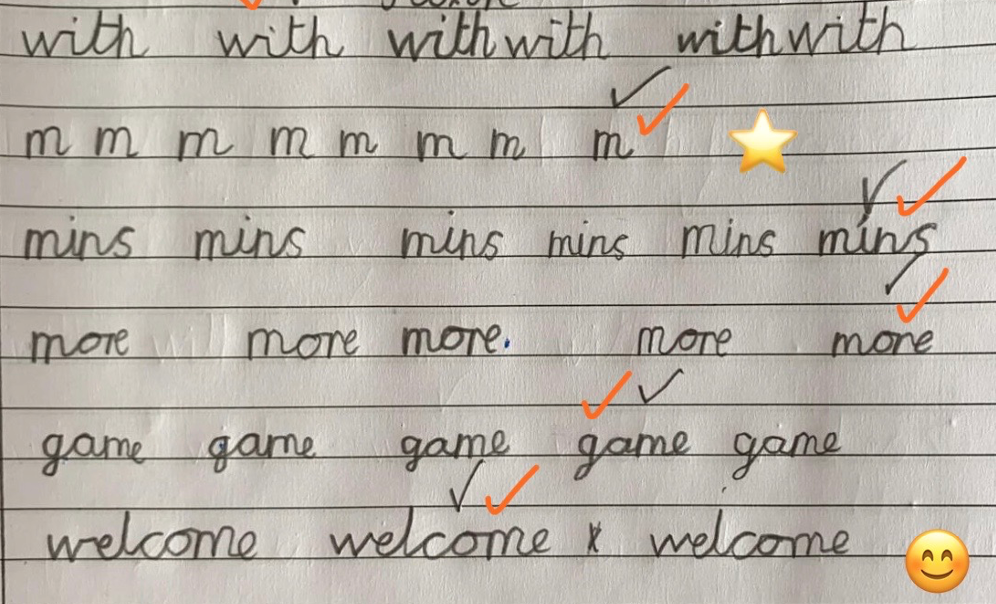
children rarely look back to the start
Sometimes an example is written at the beginning of a line for a child to follow. What can happen is that children use their own last example as the place holder for the next one they write. They don't seem to see the lines and the writing drifts.
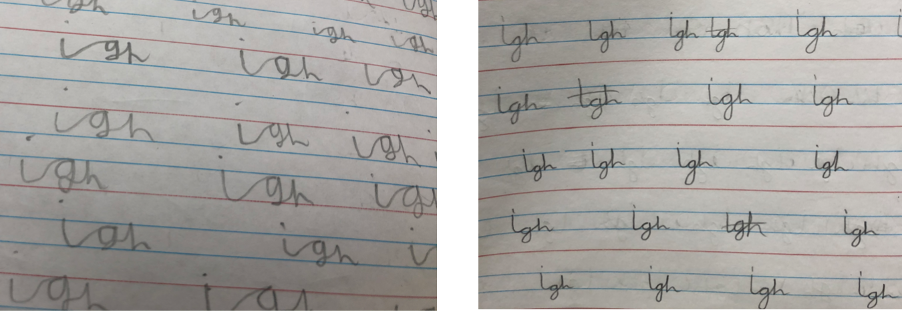
trying to use handwriting lines like regular lines
Sometimes children get muddled between 'regular' and 'special' lines.
In the example on the left the child doesn't understand the significance of the line colours and is actually writing in the wrong place.
On the right the child is using the main middle line as a regular one (well not for 'i' but for 'g' and 'h'). The confusion affects the practice.
When to use handwriting lines
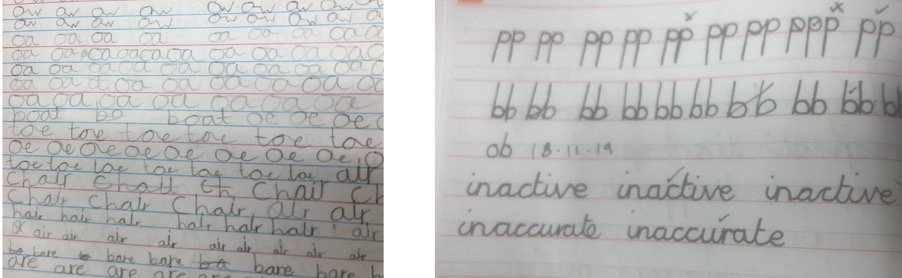
unnecessary use of handwriting lines
Often I wonder why children are being asked to use special handwriting lines. Once they have accurate letter formation and control it would be better to practise handwriting on the regular lines they are expected to use generally.
A common frustration I hear is that handwriting in practice doesn't translate to everyday work.
Well firstly, the task demands on working memory when focus isn't specifically handwriting will see whatever is automated emerge.
Secondly, switching between lines takes a while for the brain to automate and adapt smoothly. It's like switching between driving a manual and automatic car. It takes a bit of time to switch when you've been doing one more often than the other.
Thirdly... time. Handwriting practice is shorter and slower. We can all write with more control when we slow down.
It's not all doom and gloom! I love handwriting lines - children just need to be taught how to use them effectively and, in my opinion, they are best used as an intervention rather than just because they're handwriting lines so that's what we do.
In this context I prefer much simpler lines for practice:
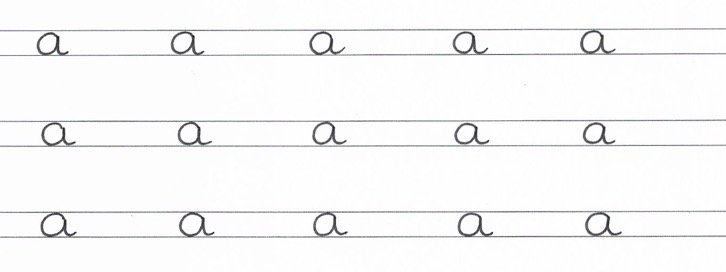
example of a Better Handwritten practice sheet
After watching a demonstration, the child writes between the letters so they always have a good model in view:
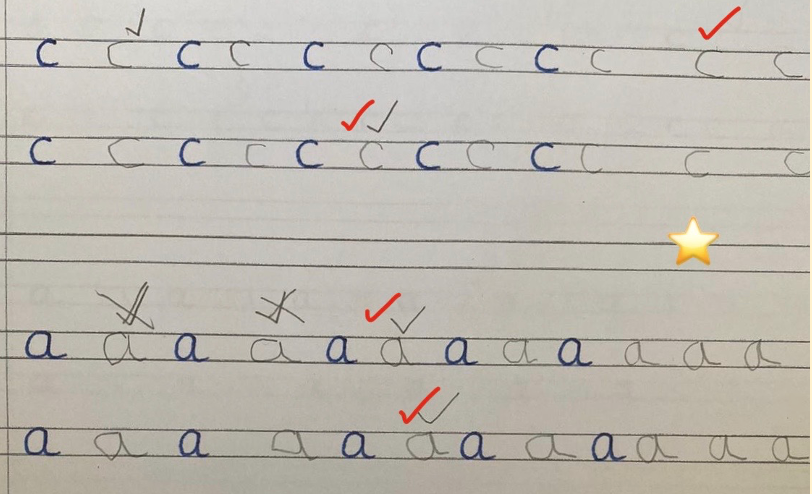
completed practice
Let's look at a snapshot of how targeted use of handwriting lines helped this 8-year-old :
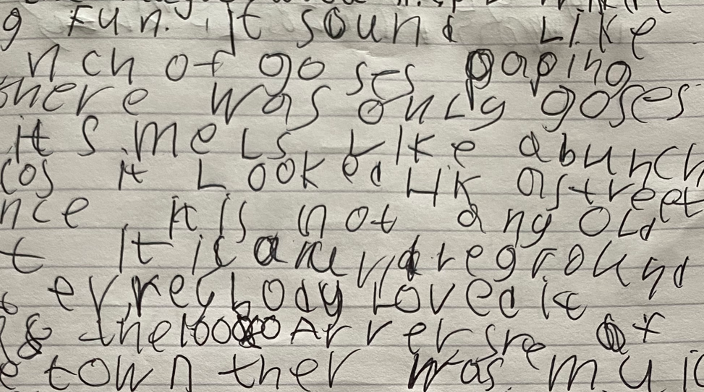
baseline sample
Here's how handwriting lines helped:
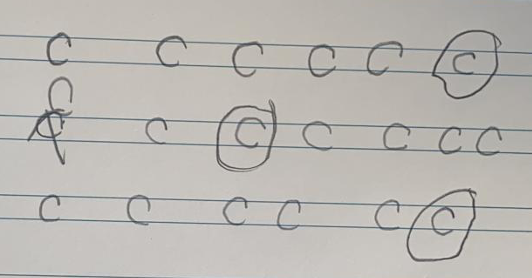
Practice 3
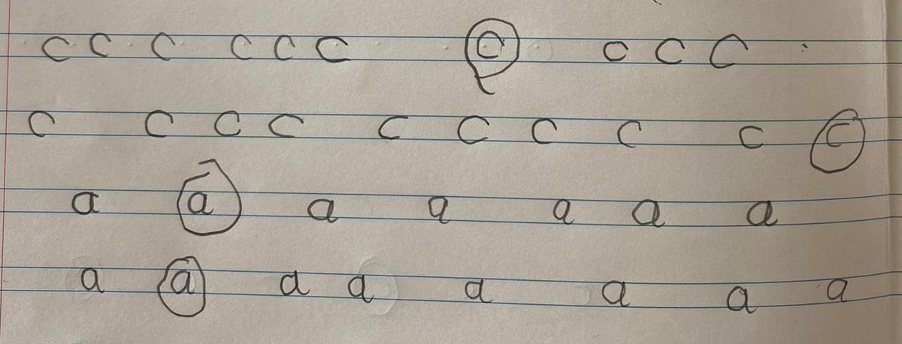
Practice 5
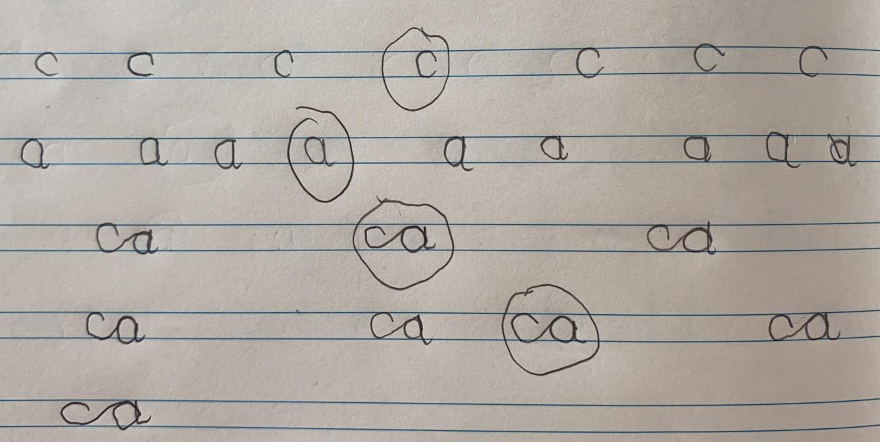
Practice 7
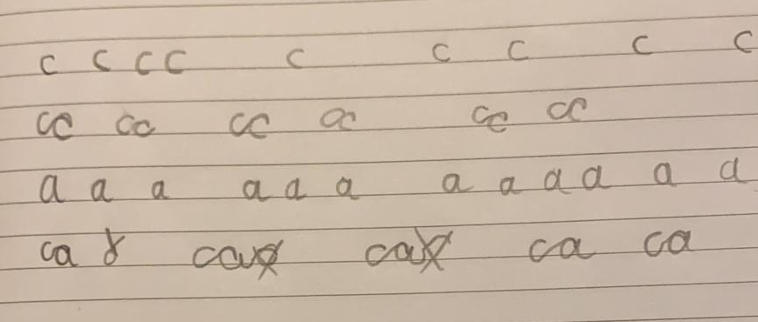
Practice 13
after 2 months
Handwriting lines are a powerful tool — but only when children understand how to use them. Without that understanding, they can just as easily confuse as support.
If you'd like to receive these reflections each week, you can subscribe to the Handwriting Matters Newsletter. Many teachers and parents read along — you’re very welcome to join them.